

Buying a home is likely the biggest financial decision you’ll ever make, and understanding the closing process is crucial for a smooth and successful transaction. This article will guide you through what to expect at closing when you buy a house with a mortgage. We will clarify the key steps involved, from final mortgage paperwork and loan document signing to the transfer of funds and the handing over of the keys, demystifying this often-complex part of the home-buying process.
The closing day is the culmination of weeks or even months of hard work, involving your real estate agent, lender, and the seller. Knowing what to expect regarding closing costs, home appraisal requirements, and the final walk-through inspection will ease your anxiety and allow you to confidently navigate the complexities of your new home purchase. We will break down each stage of the closing process, explaining what you need to bring, what documents you’ll sign, and what to do if any unexpected issues arise. Preparation is key, and this article aims to provide you with the necessary information to make your closing a positive experience.
Overview of the Closing Process
The closing process, also known as settlement, is the final step in purchasing a home with a mortgage. It’s a crucial stage where all the legal and financial aspects of the transaction are finalized. This involves numerous parties, including the buyer, seller, real estate agents, mortgage lender, title company, and potentially others depending on the specific circumstances.
Prior to closing, a significant amount of preparation occurs. This includes securing a mortgage loan, conducting a home inspection, negotiating the purchase contract, and obtaining homeowners insurance. The buyer will typically need to provide proof of funds, pay closing costs, and sign numerous documents. The seller is responsible for fulfilling their obligations as outlined in the purchase agreement, such as providing a clear title to the property.
During the closing, all parties meet (often virtually nowadays) to review and sign the final paperwork. This includes the mortgage note, deed, closing disclosure, and various other essential documents. The closing disclosure is a crucial document that outlines all the final costs associated with the transaction, ensuring transparency and preventing surprises. The funds are then exchanged, with the buyer receiving the keys to their new home and the seller receiving the proceeds from the sale.
The title company plays a vital role in the closing process. They are responsible for ensuring a clear and marketable title to the property, meaning there are no legal issues that could affect ownership. They also handle the escrow process, managing the flow of funds and ensuring that all parties receive the appropriate payments at the proper time. After closing, the title company will officially record the transfer of ownership with the relevant authorities.
The entire closing process can be quite complex, and it’s highly recommended that buyers and sellers seek professional guidance throughout. A real estate attorney or experienced real estate agent can help navigate the process, ensuring a smooth and successful transition of ownership.
Documents You’ll Be Asked to Sign
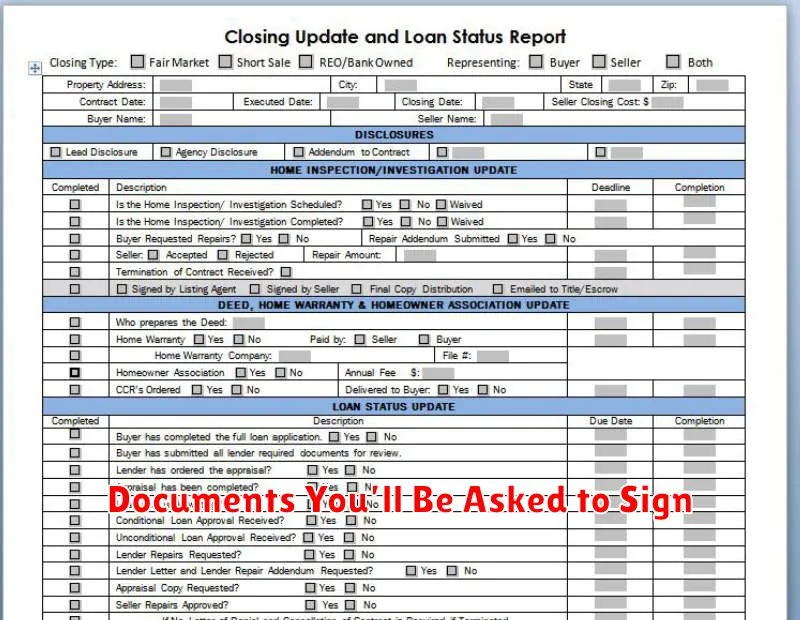
The closing process involves signing a significant number of documents. It’s crucial to understand each document before signing, as they legally bind you to the terms of the purchase. Taking your time to review and ask questions is essential.
One of the most important documents is the mortgage note, which outlines the terms of your loan, including the interest rate, loan amount, and repayment schedule. You will also sign a mortgage deed, which legally transfers the ownership of your home to you and secures the loan against your property. The HUD-1 Settlement Statement (or the Loan Estimate, depending on the timing) details all the costs involved in the closing process, including fees paid to your lender, real estate agents, and other third parties. It’s imperative to verify every item on this statement for accuracy.
Other documents you might be asked to sign include a deed transferring ownership of the property, affidavits concerning your financial status and ownership claims, and insurance documents showing proof of homeowner’s insurance. You may also sign documents related to property taxes and homeowners association fees, if applicable.
It’s highly recommended that you bring a real estate attorney or a trusted financial advisor to the closing to help you review and understand the documents before signing. They can provide valuable insights and ensure you are fully protected throughout the process. Do not hesitate to ask questions if anything is unclear; it is better to understand everything completely before committing to a substantial financial obligation.
What Closing Costs You’re Responsible For
Closing costs are fees paid at the closing of a real estate transaction. These costs can be significant, often amounting to several thousand dollars. It’s crucial to understand what you’re responsible for to avoid surprises on closing day.
Typically, the buyer is responsible for a range of closing costs. These costs can vary depending on your location, the type of loan, and other factors. However, some common expenses include:
Loan origination fees: These fees compensate the lender for processing your mortgage application.
Appraisal fee: The lender requires an appraisal to determine the property’s value.
Title insurance: This protects you against potential title defects or claims on the property.
Homeowner’s insurance: You’ll need to provide proof of homeowner’s insurance before closing.
Property taxes: Prorated property taxes are often due at closing.
Recording fees: These fees cover the cost of recording the transfer of ownership with the local government.
Survey fees (sometimes): In some cases, a survey of the property may be necessary.
Underwriting fees: These fees cover the lender’s review of your financial information.
It’s strongly recommended that you receive a detailed closing disclosure from your lender well in advance of the closing date. This document will outline all the costs you are responsible for. Reviewing this document carefully and asking questions about anything unclear is crucial to ensure you’re prepared for the financial obligations of closing.
Remember to factor all closing costs into your budget when planning your home purchase. Failing to do so could lead to unforeseen financial strain after you’ve already committed to buying the property.
How Escrow, Insurance, and Taxes Are Finalized
At closing, the process of finalizing escrow, homeowners insurance, and property taxes takes place. These are typically handled through your mortgage lender and are crucial components of the home buying process.
Escrow accounts are managed by your lender and hold funds to cover your property taxes and homeowners insurance premiums. At closing, the lender will calculate the amount needed to fund your escrow account for the first few months of your mortgage. This initial payment, often a significant sum, ensures you have sufficient funds to cover these expenses as they become due. The lender will confirm the accuracy of the amount and ensure that this money is correctly deposited.
Your homeowners insurance policy must be in place before closing. Proof of insurance, showing adequate coverage, will be a required document. The lender will verify that the policy is with a reputable company and provides sufficient protection against damages or liabilities. The insurance premium is usually factored into your monthly mortgage payment.
Property taxes are another crucial element finalized at closing. The lender will determine the appropriate amount based on your local tax rates and the assessed value of your property. The lender will collect the necessary funds for your share of property taxes for the current year, or a portion thereof, depending on the tax cycle in your area. These funds are then deposited into your escrow account.
It’s important to understand that the precise details of how escrow, insurance, and taxes are handled at closing can vary based on your location and the specific terms of your mortgage. It’s always advisable to review all closing documents carefully before signing and to clarify any questions you might have with your lender or real estate attorney.
When You Get the Keys to Your Home
The moment you receive the keys to your new home is incredibly exciting, marking the culmination of a significant financial and emotional journey. This usually happens immediately after the closing process is complete and all the necessary documents are signed and recorded.
Your real estate agent or closing attorney will typically hand over the keys, along with any other relevant documentation such as a homeowner’s manual or information regarding the home’s systems (heating, cooling, plumbing, etc.). Take this opportunity to ask any remaining questions you might have about the property.
It’s a good idea to conduct a final walk-through immediately after receiving the keys to identify any unforeseen damage or issues that may have occurred between the final inspection and closing. While a thorough inspection was likely done prior to closing, this provides a final opportunity to confirm everything is in order before officially moving in.
Before celebrating, remember to perform a thorough inspection of your new home. Check for any damage that wasn’t previously noted and make sure all appliances and systems are functioning correctly. Documenting any problems immediately will protect your interests moving forward.
Finally, take some time to savor the moment! The feeling of owning your own home is a significant achievement. Enjoy the process of settling in and making it your own.
Final Tips Before Walking Into Closing

Before you head to the closing table, take a few crucial steps to ensure a smooth and efficient process. Review all documents thoroughly. Don’t hesitate to ask your real estate agent, lawyer, or lender to clarify anything you don’t understand. This is your biggest financial commitment, so understanding everything is paramount.
Confirm your closing costs. You should have received a final Closing Disclosure (CD) at least three business days before closing (as required by law). Double-check that all fees and charges are accurate and align with your expectations. Any discrepancies should be addressed immediately.
Gather necessary funds. Ensure you have sufficient funds in your account to cover all closing costs and any potential unexpected expenses. Having everything ready avoids delays and potential complications.
Bring required identification. You will need to bring valid government-issued identification, such as a driver’s license or passport, for verification purposes. Check with your closing attorney or lender regarding specific identification requirements.
Plan for the time commitment. Closing can take a couple of hours. Allow yourself ample time, and avoid scheduling anything else immediately afterward.
Finally, bring a trusted person with you for support. Having someone present can help ease any anxiety and assist in managing the paperwork and details of the process. Remember, thorough preparation is key to a successful closing.
